Peer-to-peer discussion is always a core element of our IHALC in-person events. At last week’s London One Day Summit, we were inspired by Dan Brooks, VP of Brand & Creative at Monday.com. In his hugely entertaining talk, Dan referenced the V2MOM framework for teams – Vision, Values, Methods, Obstacles, and Measures.
In groups, we asked attendees to tell us what their most important Values were and also their greatest Obstacles.
We wanted to share some of the big themes that came out of these discussions.
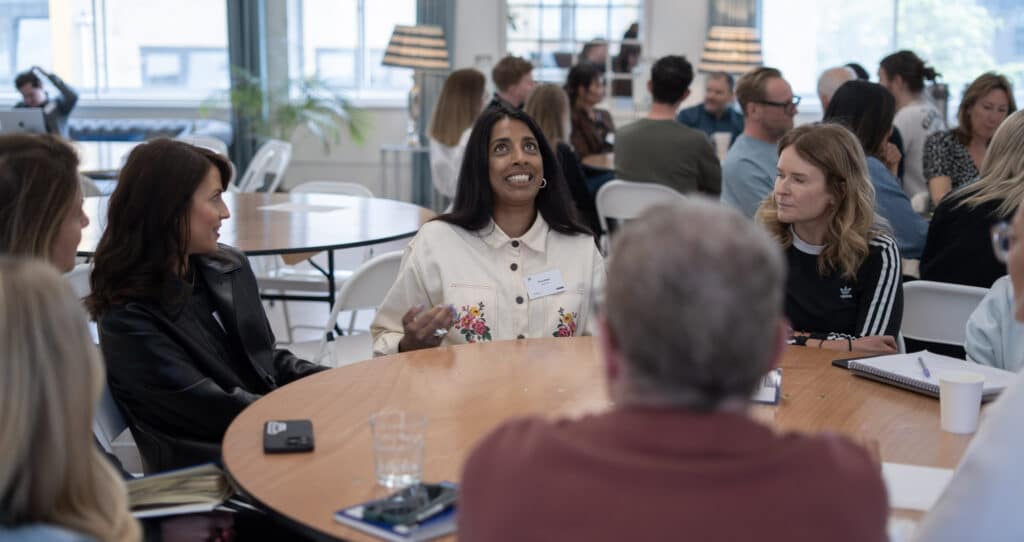
Values
Trust was probably the number one response here, but what does that mean? Trust comes from deep knowledge of the brand which comes from living and breathing it each day. In-house teams become subject matter experts which builds credibility, both internally and externally, and strong relationships.
All of which helps with the other most-cited value – being collaborative. When people trust that you know what you are talking about and that you are best-placed to help them solve their problems, relationships (not just with stakeholders but also with external partners) are strengthened and produce better results.
With in-house teams coming under increased pressure to use automation and AI, it was interesting to see attendees cite taste, soul and craft, as well as the need to protect the work and build human, emotional resonance with audiences as other highly rated Values.
We also saw integrity, culture and fun cited by more than one group.
Yes, in-house teams are embracing the potential of technology, but they are mindful of preserving the value of creative human beings working together to make meaning. It’s not either or, it’s both.
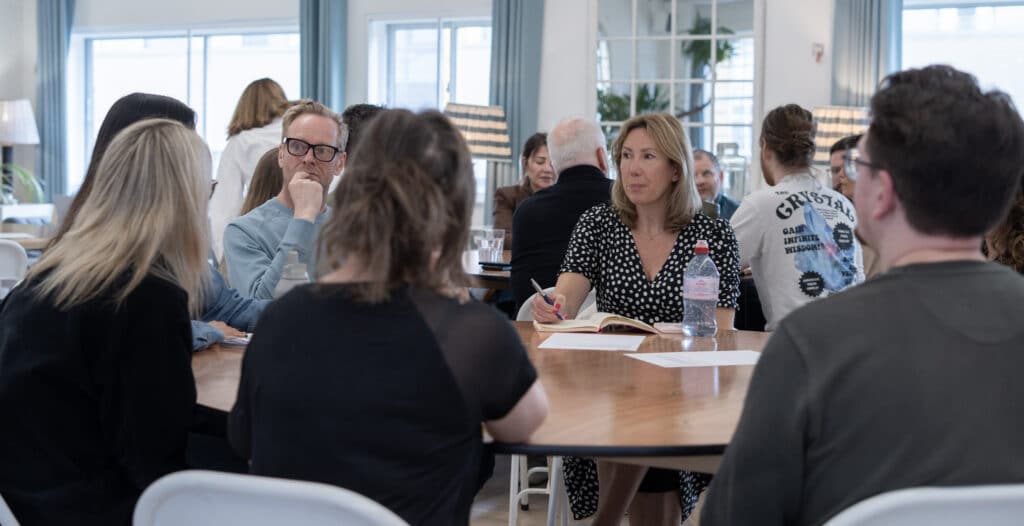
Obstacles
Where do we start? With admirable brevity, one attendee simply wrote ‘stakeholders’.
The sheer volume of work, where the flood of briefs lacks prioritisation and everything is always critical, always “at DefCon5”, was a common, more specific, complaint. This is exacerbated in-house where teams feel like they can’t say no.
So there was much discussion about how to put in place processes and structure, protecting what were seen as the core responsibilities of the team.
But there is a potential issue here.
There can be a perception that there is the high-volume, performance marketing work and then there is “the work that matters to the business”. We often hear of a desire to “free up creatives to do the important stuff”, particularly when it comes to using AI. But surely both types of work have a role – the templated promotion of a personalised special offer has its place as much as the beautifully-art directed product shot. What matters is having the appropriate processes and technologies in place so that both can make a contribution to growth without getting in each other’s way.
This just goes to emphasise the importance of Creative Operations in-house, which was cited by many attendees.
In order to combat overload, our members are building self-serve platforms whereby stakeholders can access templates to create their own assets. This takes care of some of the ‘busy work’ that would otherwise place pressure on teams whose time could be spent elsewhere. But it also raises challenges. Brand consistency and compliance needs to be carefully monitored and often still requires intervention from the creative team.
But there is a wider point here that is also fuelled by the use of AI. Members tell us that there is a growing problem where everyone feels like they are a creative now, which is not helped by the messaging around some of the new tools out there. This can lead to a devaluing of creative skills as well as a brand consistency free-for-all with departments using AI tools themselves, unbeknownst to the in-house agency or studio, with all the reputational risks that implies.
Which leads us to another issue cited by members: ownership of brand and creativity within the organisation. In-house agencies are increasingly moving to occupy this territory. We have spoken before about the idea of the IHA or creative team as the ‘conductors of the orchestra’, with ownership of the creative ecosystem and at least a voice, if not control, over which agency, production and tech partners the organisation works with and why. In many cases, this may still be the remit of the CMO, but in-house teams are now part of that conversation.